The Story of Piano Sonata No. 2
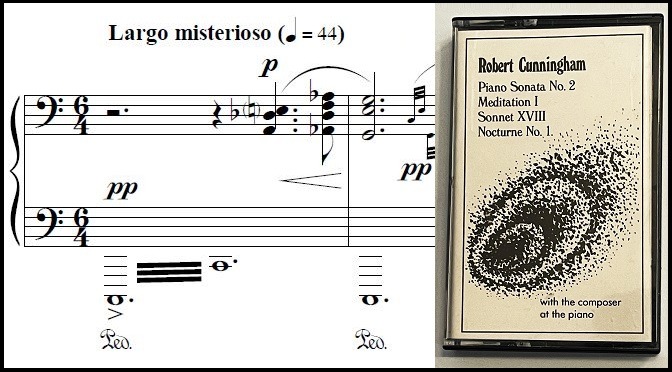
In March 2022 I produced the first digital recording of my Piano Sonata No. 2, after which I uploaded to YouTube a video of that performance and a second video showing the score along with the audio. The sonata had been composed almost four decades earlier. It was completed in February 1984, after which I produced a recording on tape, which was released to the public in cassette format in 1985 along with three shorter compositions from the same period.
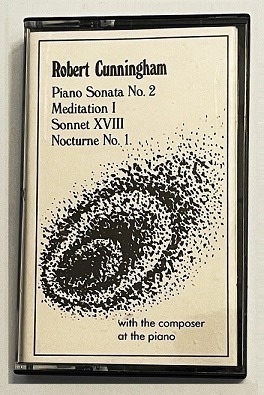
The tape soundtrack unfortunately became badly degraded over the years, but the liner notes are still worth reading today. They were written by the late William R. Scarborough, who had also written the liner notes for the published cassette of my first piano sonata two years earlier, which I published in this earlier blog post. The portions most relevant to the sonata are reproduced below.
| “I believe that every artist projects a particular sense of life into his or her works; that the great Romantic composers only began to explore music’s capacity to project the joy of existence and heroic potential of human nature; and that in so doing they laid the foundation for a truly modern music.”
Such is the artistic credo of Robert Cunningham, composer of the works presented on this recording. Romanticism in music is that approach which allows to individual emotion and consciousness the freest, most spontaneous and clearest expression. As the Romantic composer Mendelssohn put it, such music expresses “not thoughts too indefinite to clothe in words, but too definite,” since words notoriously mean different things to different people. Romantic music is bound neither by the formal constraints of Classicism nor the hyperintellectuality typical of much twentieth-century music, both of which can inhibit or even preclude open expression of feelings. The major work on this recording is Mr. Cunningham’s Piano Sonata No. 2 in C Major, completed in February 1984. A much more confident work than its predecessor, the Piano Sonata No. 1 (1982; available on a separate cassette), it shows major advances in formal organization and textural and harmonic treatment. Where the earlier sonata is cast in a fairly conventional four-movement frame, the Piano Sonata No. 2 is a large-scale single-movement work combining two organizing principles. Its form can be seen as sonata-allegro with introduction and extended coda, the exposition consisting of three sections contrasting in mood. All this apparently varied material, however, derives from the same six-tone pattern (featured in inversion in the development section), so that it is just as valid to view the sonata as based on the principle of thematic transformation. Like much Romantic piano music, e.g., Schumann’s Symphonic Etudes, there are unmistakable symphonic overtones in both the thematic materials and their settings; a kinship to the tone-poem principle is obvious, too, though the composer offers no specific programme. William R. Scarborough |
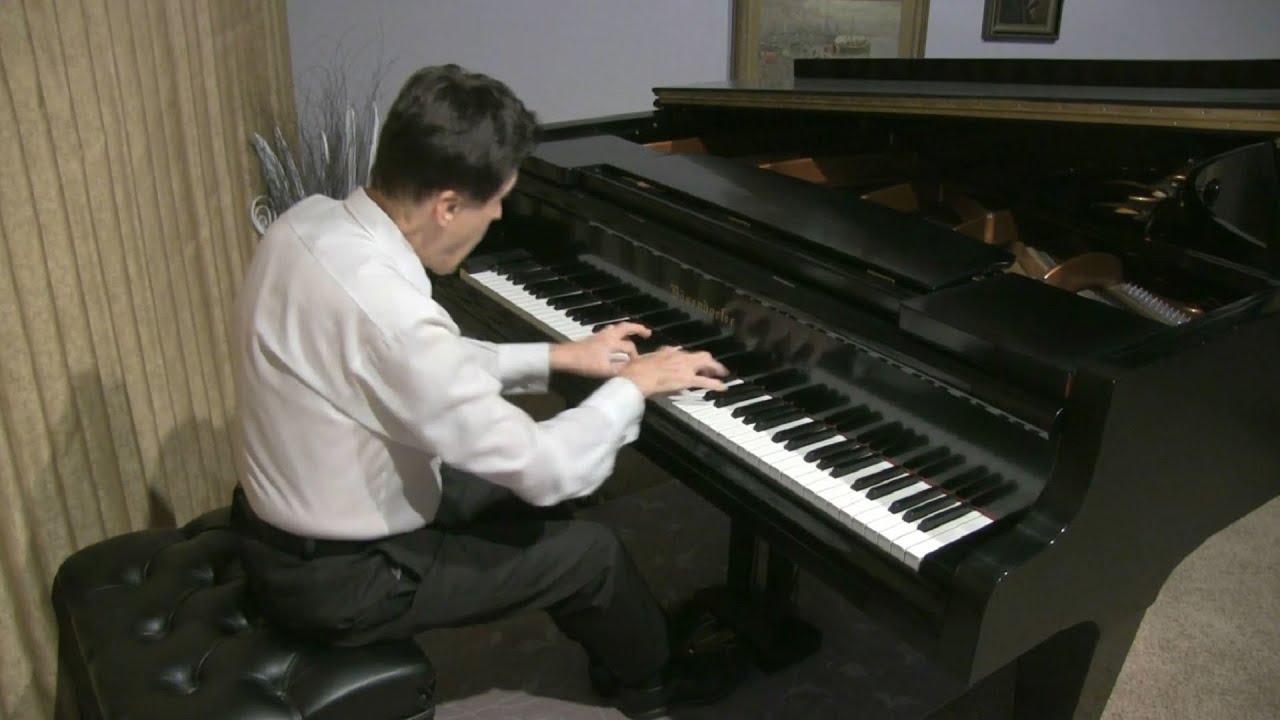
Piano Sonata No. 2 (performance video):
Piano Sonata No. 2 (video with score):
