Themes of Sonata No. 2 (Part II)
In Part I, which introduced this three-part series on thematic transformation in my Piano Sonata No. 2, we examined the work’s principal theme and the manner in which it emerges gradually in the introductory section of the sonata. Following that introduction, Theme I is stated in full beginning in bar 16, around 1:47 in the video at the bottom of this post. It is based on two motives, as can be seen in its opening phrase:
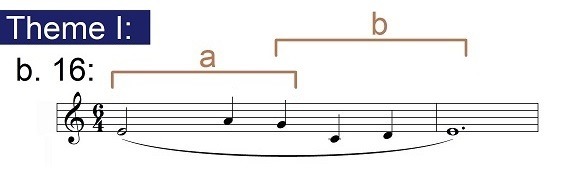
The a-motive consists of an upward leap followed by a descending step. The b-motive is almost its mirror image, consisting of a downward leap followed by two ascending steps.
This theme is joyful and energetic, building to a fortissimo climax before subsiding gradually to a pianissimo at bar 37. After a fermata and a caesura, a contrasting, lyrical second theme begins on the last beat of bar 37, marked Lento grazioso (3:24 in the video).
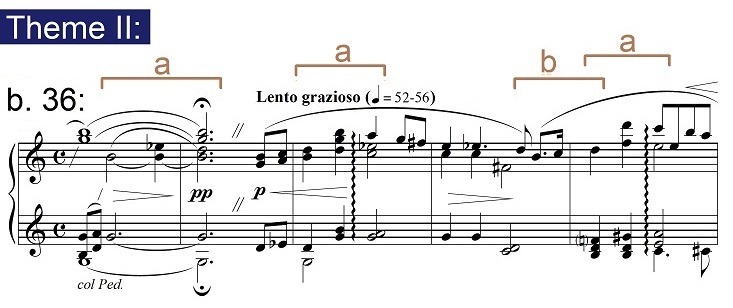
The first four beats of this Theme II imitate the melodic pattern of the close of the preceding theme, a connection easily grasped by the attentive listener despite the intervening caesura. The new theme as based on the same two motives as its predecessor, but is decidedly different in character, quietly expressive and sentimental.
A transitional passage in bb. 65-70 leads into the exposition’s third and final theme.
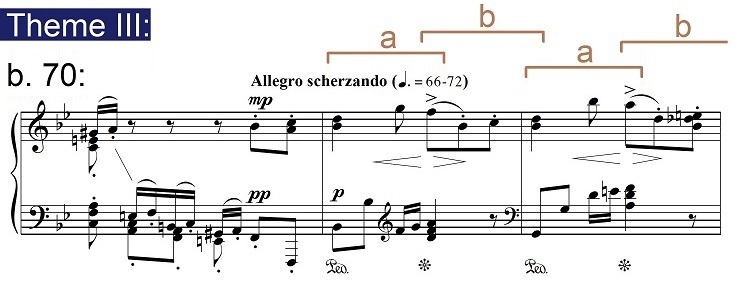
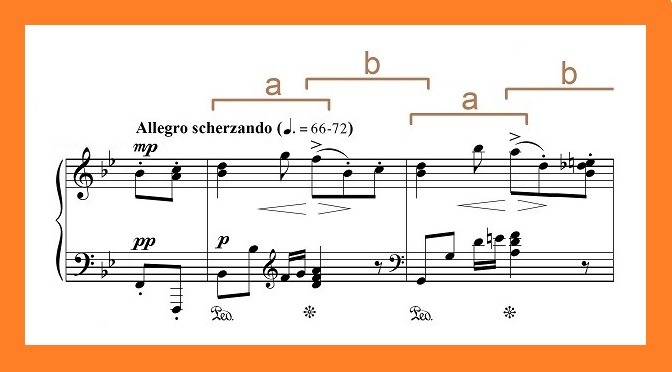
Theme III (5:57 in the video) is radically different in character from both of its predecessors. Marked Allegro scherzando, it is playful, energetic, and capricious. As can be seen, however, it is constructed from the same a-motive and b-motive as the other themes.
As I commented years ago in another post to this blog: “The human mind thrives on perceiving unity in the midst of diversity, and that perception is at the core of our experience of the arts, including music.” The device of thematic transformation enables the listener to realize a full gamut of human emotions in the course of a sonata or other large-scale work, yet at the same time to hear it as a unified whole.
In the next and final post in this series, I will show how the use of this device continues into the development section and coda of Piano Sonata No. 2.
Piano Sonata No. 2 Score Video:
