
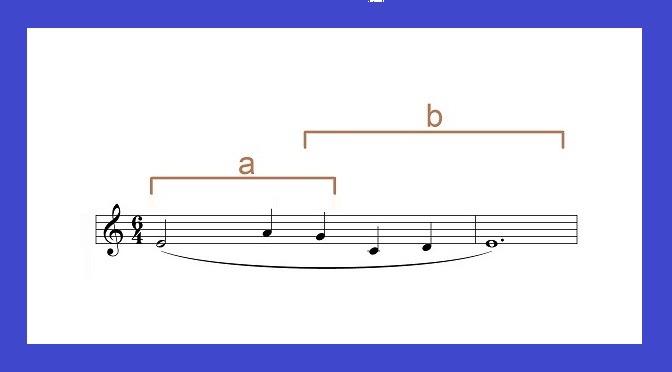
Themes of Sonata No. 2 (Part I)
My Piano Sonata No. 2 in C Major was completed in February 1984, and its first digital recording was completed in March 2022. The composition consists of a single large movement in sonata-allegro form, including an introduction and a coda. The sonata’s thematic materials, and in particular the three themes of the exposition, are sharply contrasting in mood and tempo. But because they are closely interrelated through thematic transformation, the sonata still comes across as a unified work of art. This post is the first of three in which I plan to explain the thematic relationships. This Part I focuses on the exposition’s principal theme and on how it grows out of the preceding introduction.
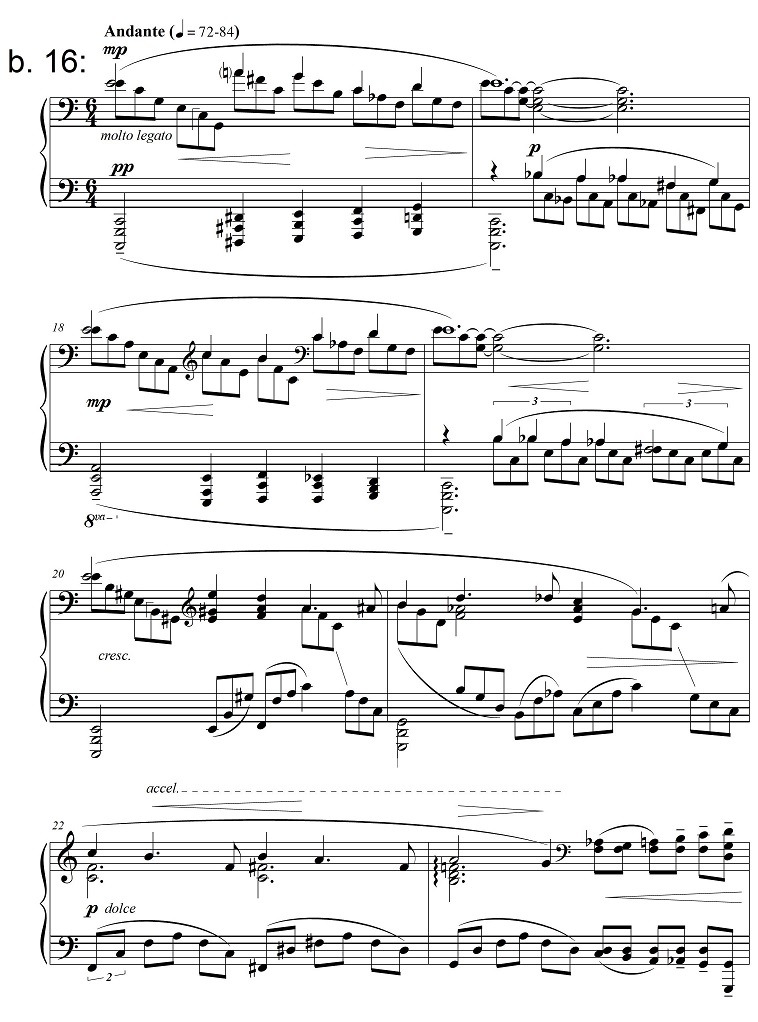
The principal theme is fully stated beginning in bar 16 (around 1:47 in the video at the bottom of this post). Its opening bars begin rather quietly at an Andante tempo. It builds gradually in intensity and tempo to a Più allegro (b. 24, not shown) and then to a fortissimo climax, before subsiding in preparation for the second theme.
The melodic shape of the theme’s opening phrase consists of two motives, overlapping by one note.
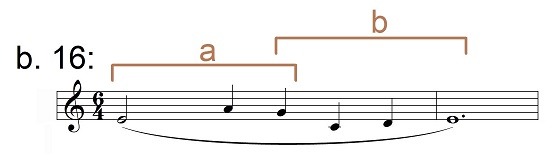
The a-motive consists of an upward leap followed by a descending step. It is mirrored (approximately) by the b-motive, which consists of a downward leap followed by two ascending steps. In this first phrase the leaps are a perfect fourth and a perfect fifth, but as the melody develops (as seen earlier)) the leaps grow wider and wider, which I think is probably one reason why this theme feels like a “soaring melody.” Personally, I think of it as embodying freedom and joy.
This melody, however, is foreshadowed in the introduction that precedes bar 11, where it emerges only gradually, like order emerging from primeval chaos. The sonata opens with slow, mysterious harmonies over a tremolo on the tonic, where the top notes of the chords (E-A♭-G) outline the a-motive. A rapid arpeggiation follows in bar 2, consisting of C major harmony decorated with the non-harmonic tone A♭ (which will resolve to G in the following measure). Within this arpeggiation, the a-motive is echoed in higher octaves several times.
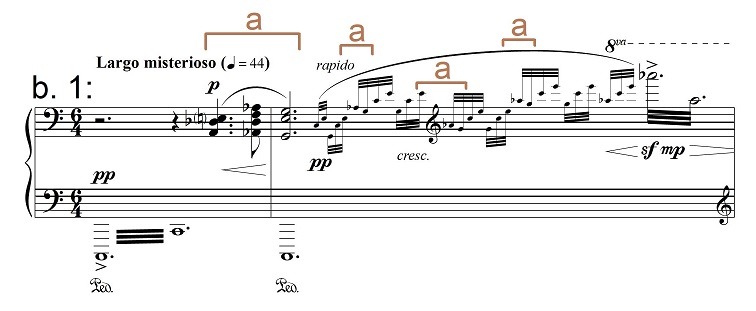
The first eight measures are based exclusively on the a-motive. In measure 9, it is finally extended by the b-motive, thus anticipating the first phrase of the principal theme.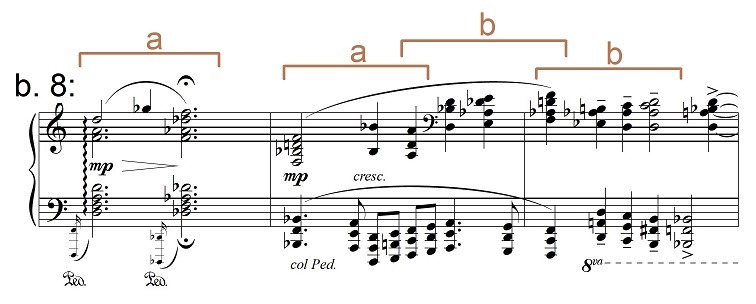
The harmonies in the first 11 measures, although centered on C major, are dark and mysterious, creating an atmosphere of suspense and expectation. In bar 12, however, a long pedal point on the dominant begins, along with a crescendo, which culminates in the quiet but jubilant entry of the complete theme at measure 16, as seen earlier.
Part II of this series will examine how the three thematic areas of the exposition are interrelated.
Piano Sonata No. 2 Score Video:
